Remote and exterior labor forces run a long method from help, in every sense. When something goes wrong on a farm track, a forestry block, a wind farm, a rail corridor or a building website 2 hours from the nearby medical facility, there is no quick backup. Your team is the response.
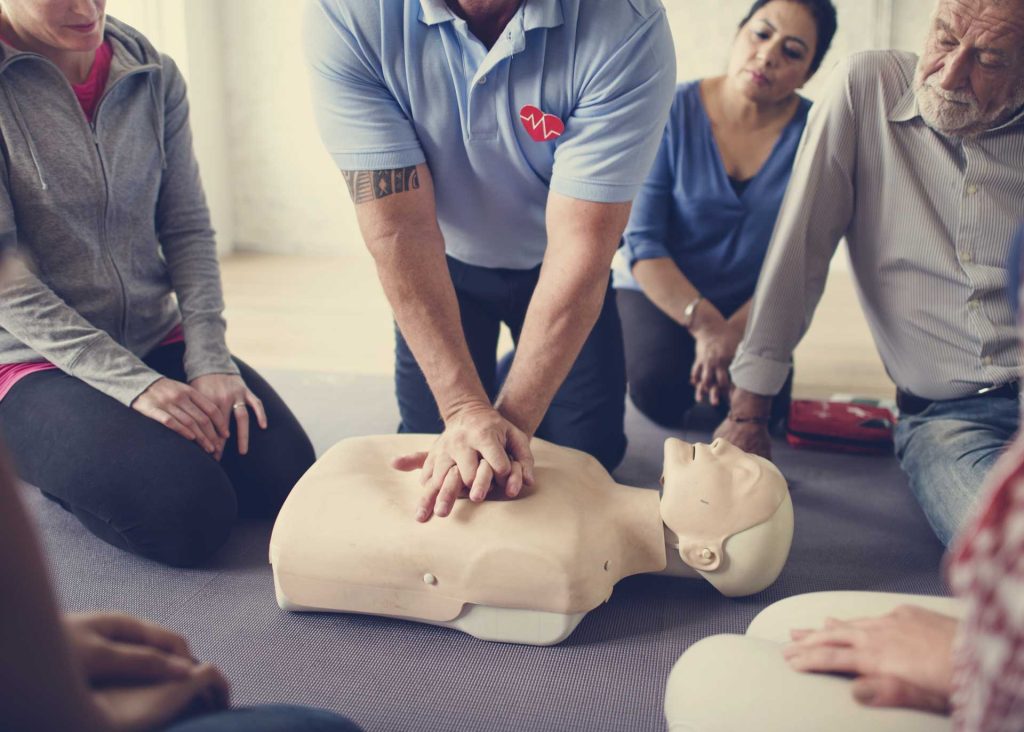

That truth changes first aid and cpr courses Logan just how you need to consider first aid training. Traditional a couple of day classroom courses, educated in city offices, still have their location. But also for lots of employers, express first aid courses and fast CPR training are what make regular, dependable training viable. If individuals can not spare a full time off the work, they often end up with no training at all.
I have trained outdoor employees that quietly confessed they had actually refrained any kind of first aid or CPR courses for 8 to ten years, simply because they can not justify losing a day of performance. As soon as their supervisor switched to express first aid training, presence leapt, and the overall standard of feedback in drills improved within a single season.
The goal is not to tick a conformity box. The purpose is for the initial individual on scene to show speed, tranquility, and capability, also in rough environments. Express first aid, when created well, can support that.
Why remote and exterior workforces need a different first aid mindset
If you run a metropolitan workplace, a lot of medical emergencies obtain an expert ambulance response within minutes. For a team operating in remote or sturdy surface, the time from injury to innovative care may be an hour or more. Those added mins transform everything.
In remote and outside atmospheres, you typically deal with a mix of factors. There might be limited interactions, lengthy cot carries, poor weather condition, and improvised tools. Threats are additionally various. Quad rollovers in farming, power saw injuries in forestry, falls from elevation in building and construction, and cool water immersion in coastal job all show up more often than city cardiac arrest at the printer.
In my experience, three changes in believing make the largest difference for remote teams.
First, the basic first aid course content have to be adapted to the real field threats. Rural and outside employees require more ecological emergency training, even more scenario practice with limited equipment, and even more focus on improvisation.
Second, employees should expect to deliver care for longer. That implies stronger fundamental life support abilities, not just a quick introduction of CPR and defibrillation. Look after bleeding, breathing, and shock can conveniently stretch to 30 to 60 minutes before rescue arrives.
Third, training should be regular sufficient and sensible enough that people do not freeze or fail to remember. This is where express first aid courses and fast first aid training prove useful. Short, concentrated sessions delivered more often have a tendency to stick far better than a huge block of web content provided when every few years.
What "express" in fact indicates in first aid and CPR training
The term express first aid course obtains utilized loosely. Sometimes it implies a strong, pressed program that respects time without reducing corners. Various other times, it is little bit more than a hurried lecture for a certificate on paper. The difference is in how the course is structured and what is called for before and after the classroom session.
A well developed express first aid or express cpr course typically does three things.
It moves history concept to self paced discovering. Students complete online components prior to they arrive. They cover lawful responsibilities, standard composition, and crucial principles at their own pace. This implies the in person time can focus on practical work.
It narrows the focus to the skills most pertinent to the employees. For remote and exterior crews, that suggests hefty focus on managing blood loss, cracks, spinal problems, hypothermia, warmth illness, bronchial asthma, anaphylaxis, and CPR. Less time is invested in reduced danger, low impact conditions.
It requires analysis that demonstrates competence, not simply attendance. A fast first aid course can properly honor a first aid certificate if individuals reveal, under some stress, that they can execute key skills to typical. Short does not require to imply superficial.
By contrast, beware of fast first aid courses or fast cpr courses that promise certification with practically no functional evaluation, or no opportunity to exercise abilities on manikins, or no situations that mirror your workplace. Fast certification is attractive, but if the training does not hold up under stress and anxiety, it can create incorrect confidence.
The core skills that can not be compromised
Express first aid courses live or die by what they maintain, not what they reduced. For remote and outside employees, particular abilities are non flexible, even in fast first aid courses or fast cpr refresher courses.
At a minimum, any type of express first aid training for these settings ought to leave individuals experienced in the adhering to cluster of skills.
They must be able to run a rapid scene study and main analysis. That consists of threat sign in vibrant atmospheres, calling for help early, and prioritising life dangers prior to second injuries.
They first aid training onsite should fit with first aid and cpr as a combined response. That means reliable upper body compressions, rescue breaths where ideal, risk-free use an AED, and turning between rescuers to minimize exhaustion throughout extended CPR. Many express cpr courses aim at city cases where ambulance feedback is quick. For remote workers, express cpr training have to anticipate longer efforts.
They must manage significant blood loss with direct stress, stress dressings, and, where appropriate and legal, tourniquets and haemostatic dressings. Forestry and building sites in particular see injuries where blood loss is the crucial factor.
They needs to secure believed spinal injuries on unequal ground with extremely minimal gear. In a real occurrence, you seldom have a full paramedic kit. A fast first aid course that educates people to improvisate with coats, ropes, and knapsacks is better than one that only teaches textbook techniques.
They should recognise ecological threats rapidly. Hypothermia, hyperthermia, warm stroke, dehydration, and lightning risk act very in a different way in remote terrain than they perform in town. Exterior workers require greater than a passing slide on these topics.
Once these foundations are in area, express first aid courses can layer in allergic reactions, bronchial asthma, diabetes, seizures, minor injury care, and various other regular concerns. For some groups, particularly those managing children in outdoor education or rural child care, express child care first aid courses also require modules on choking, febrile convulsions, and paediatric CPR ratios.
Express child care first aid for outdoor settings
Many childcare employees and educators are now leading kids into forests, farm check outs, exterior education camps, and nature play programs. The risks are various to a classroom. Youngsters roam, climb, react highly to insect stings, and come to be hypothermic or dried faster than adults.
An express child care first aid course that mirrors a typical class program misses that truth. Express childcare first aid training for exterior setups should cover three added dimensions.
First, paediatric first aid and cpr method need to represent actual surface. Rescuers typically try youngster CPR on outing tables, damp ground, or confined car seats. Training should give staff time to try CPR on child and baby manikins in these unpleasant settings, not just on a flat tidy floor.
Second, an express childcare first aid program requires a stronger concentrate on allergy and bronchial asthma administration in the area. That implies practical drills with adrenaline car injectors, spacer devices, and inhalers, and practical situations where one adult handles multiple distressed children at once.
Third, the course must talk about group monitoring under stress. In every real case I have evaluated that involved kids outdoors, there was at the very least a single person doing first aid and a single person shepherding or comforting the remainder of the group. Training that presumes a single youngster and a solitary adult disregards just how childcare in fact works.
Providers who offer express child care first aid courses customized to outside programs are still a minority. When you search for an express child care first aid course near me, ask especially regarding ecological and paediatric content that mirrors your activities. A generic program might not handle that nuance.
Making express courses work for remote rosters
A huge advantage of express first aid courses is setting up flexibility. Remote and exterior job usually operates on lineups, shift patterns, and seasonal heights that do not match a regular business week. A traditional 2 day first aid course can erase a critical work home window, especially at harvest, lambing, damp period prep work, or mid project.
I have actually seen 3 versions work specifically well.
Some companies run short express first aid and cpr courses at shift changeover factors. Crews coming off a turning remain on an additional half day to finish functional training, after ending up on-line content while on site during reduced threat periods.
Others divided fast first aid training into modules across numerous weeks. Employees complete a 2 or 3 hour express cpr course first, after that a different half day focused on injury administration, then a final session for environmental and clinical concerns. This fits around transforming climate and field conditions.
A 3rd approach makes use of a combined version where a nucleus gets advanced fap first aid training, while the wider workforce completes much shorter express first aid and fast cpr refresher course sessions. The core group serves as lead -responders, but everybody has sufficient ability to act if they are initially on scene.
However you design it, the trick is predictability. Remote employees are made use of to long drives, exhaustion, and shifting strategies. If express first aid courses are arranged carelessly, presence and retention experience. A foreseeable rotation, such as a fast first aid course every 12 months and a brief express cpr refresher at the six month mark, maintains abilities to life without frustrating the roster.
What to search for in an express first aid provider
If you kind fast first aid course near me right into an online search engine, you will certainly see a mix of huge national service providers, particular niche outside experts, and common training shops. The ideal companion for a remote or outside workforce is not constantly the most affordable or the closest. Practical experience in similar settings matters more.
When evaluating suppliers, I recommend you use a brief, concentrated list instead of count on marketing language.
1) Validate that the instructor has actual area experience. Ask whether they have actually operated in remote action, search and rescue, outdoor education, or comparable locations. In my monitoring, instructors that have actually treated patients in tough surface instruct very in different ways, with even more emphasis on improvisation and scene management.
2) Examine the structure of the express first aid course. Try to find blended learning, reasonable situation time, and clear assessment requirements. Ask the number of participants will certainly remain in each course. Quality hands on technique is tough to provide in very large groups, especially for first aid and cpr course content.
3) Testimonial the particular modules. Does the course address your threats, such as machinery entrapment, water rescue, altitude, or animal handling? Does their fast cpr and first aid program permit experiment the exact AED model and first aid packages you use?
4) Verify the certification. Make certain the first aid certificate meets your regulatory demands and market standards. Some areas specify web content and period for first aid courses and first aid and cpr training classes. A course that is too brief, without proper pre knowing, might not be recognised.
5) Ask about refreshers and adhere to up. Excellent suppliers integrate in alternatives for fast cpr refresher course sessions or short toolbox talks months later on. Ability decay is a genuine issue. You desire a partner who sees training as a cycle, not a single event.
A brief pre course discussion with the fitness instructor often tells you greater than a shiny sales brochure. Listen for sensible, certain responses rather than common claims.
Here is a basic list you can adapt when assessing alternatives:
- Does the supplier tailor material to your real workplace and risks? How much hands on time, per person, is alloted to CPR and crucial first aid skills? What online or pre course understanding is anticipated, and how is it assessed? Is the fitness instructor experienced with remote, exterior, or high threat work settings? How will certainly they assist you intend future refreshers and express first aid courses?
Balancing rate, top quality, and legal requirements
One of the most usual questions I hear from managers is whether a fast first aid course or express cpr training will certainly satisfy regulatory authorities. The straightforward response is that it depends on your jurisdiction, your sector, and the framework of the course.
Most regulators focus much less on for how long the course runs and much more on whether the needed subjects are covered to a specified criterion. That is where blended discovering comes in. If a first aid and cpr course calls for, for instance, 8 hours of overall instruction, a provider may legally supply 4 hours of on the internet modules and a 4 hour express first aid sensible, instead of a full day in a classroom.
Problems occur when fast certification is provided without that deepness. A two hour course without pre discovering, no analysis, and marginal method might not fulfill lawful limits for first aid training, also if the certificate claims otherwise. As the company, you carry duty for picking courses that satisfy standards.
There is also a risk of over dealing with. Some safety and security supervisors, melted by weak brief courses, insist that every worker attend long, common programs that cover a large range of reduced relevance material. The outcome is often bad engagement. Employees entrust to a certificate yet obscure recall of essential skills.
An effective balance for remote and outdoor teams appears like this. Most of team full focused, fast first aid courses that straight resolve leading dangers and construct solid fundamental life assistance abilities. A smaller cadre full more advanced first aid training, with longer one-on-one time and situation based assessment. With each other, they develop a split reaction system on site.
Integrating express first aid right into your broader safety system
Training by itself does not conserve lives. It has to sit within a more comprehensive system that consists of equipment, treatments, communications, and culture. Express first aid courses for remote employees function best when they are integrated right into that system, not bolted on in the nick of time to satisfy compliance.
A reliable approach tends to comply with a brief collection of actions:
- Map your top occurrence dangers and worst trustworthy situations for each and every website or project. Match those risks to details first aid and cpr skills, tools, and interaction needs. Choose express first aid courses and first aid and cpr training classes that explicitly cover those abilities in realistic scenarios. Equip groups with sets, AEDs, and communication tools that align with what they were educated to use. Rehearse response strategies with short, regular drills that mirror your training and fine-tune your procedures.
When you run drills after training, spaces end up being noticeable rapidly. Possibly the express cpr course educated proper pad positioning, but workers find their AED is kept too far from high threat areas. Possibly first aid and cpr course scenarios thought reliable mobile protection, while in truth you rely on satellite phones and radios. These understandings only emerge when training and method are very closely linked.
Over time, numerous organisations move from responsive, certificate based training to a more mature model where express first aid, fast cpr, and circumstance drills belong to an ongoing rhythm. People quit asking, "When is my following course due?" and begin asking, "When are we following exercising that rescue situation southern system?"
A short situation instance from area practice
Several years earlier, I dealt with a renewable energy firm developing turbines in a remote, gusty corridor. The closest rescue base was approximately 90 minutes away on great roadways. Early in the task, the firm sent each team to a basic metropolitan first aid course. The course covered workplace injuries extensively, but there was almost no technique in harnesses, poor weather, or on uneven ground. When we ran a joint workout with neighborhood emergency situation solutions, the gaps were obvious.
After that work out, the company upgraded its technique. They involved a service provider experienced in exterior and commercial rescue to supply express first aid courses on website. Employees completed on the internet components during downtime in camp, after that attended a 4 hour sensible that happened on real generator systems, crushed rock gain access to roads, and in lorries. Fast cpr training used the very same AED designs installed throughout the site. Circumstances included wind, noise, and the awkward angles they would certainly deal with if a person collapsed at height.

They likewise introduced short fast cpr refresher course sessions at the start of regular monthly safety and security conferences. These 20 min refreshers concentrated only on compressions, AED use, and team interaction. Within a year, when a specialist suffered a serious cardiac occasion in a staging area, the response was fast, collaborated, and positive. CPR was started within a min, the AED was used in approximately 3 mins, and handover to paramedics accompanied a clear verbal record that showed their training.
No training program ensures an outcome, but the distinction in between their initial exercise which genuine incident was raw. The useful, tailored, express first aid training plainly paid off.
Final ideas for decision makers
If you are responsible for the security of remote or exterior workers, your first aid approach is worthy of as much thought as your harnesses, guards, or lockout treatments. Time and access restraints are genuine, yet they do not need to avoid robust first aid training.
Express first aid courses, express cpr courses, and express child care first aid programs can deliver high standards in much shorter blocks when they are appropriately developed and integrated. Fast first aid and cpr training classes function best when they:
Respect the facts of your lineups and sites.
Focus above repercussion dangers and essential skills.
Use combined finding out to safeguard hands on technique time.
Support regular refreshers so skills stay alive.
Your workers may never ever need to deal with a serious injury or perform CPR halfway up a hill or next to a river going across. If they do, they will not care how much time their course ran. They will care that, under pressure, their hands and voice recognize what to do. Well chosen express first aid courses can help them get to that point, without drawing them out of the field longer than necessary.